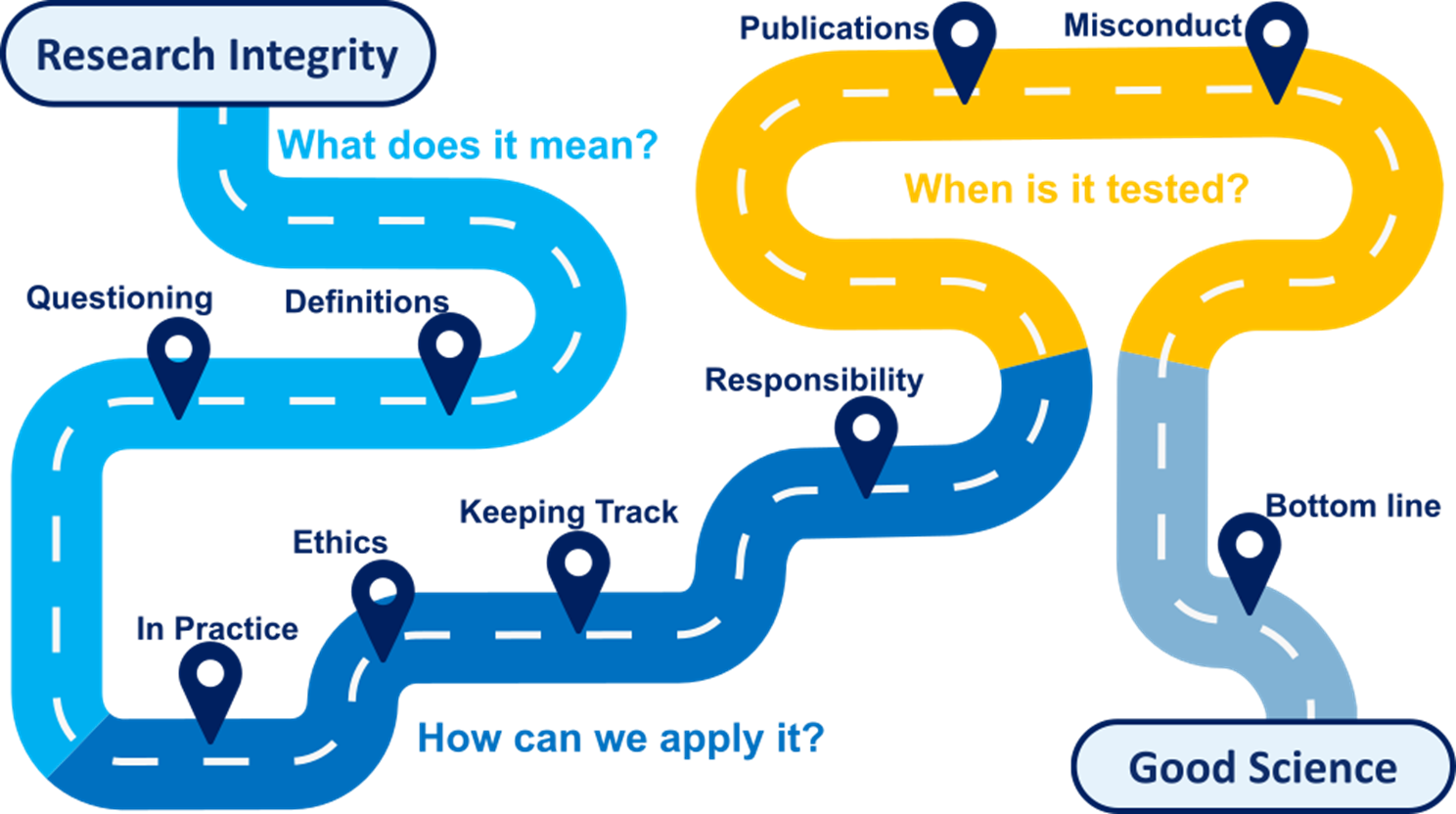
Making Good science depends on a number of key factors including a robust approach to experimental design, objective data analysis and effective collaboration with others.
This highly interactive course is practical, discusive and throught-provoking - helping to guide best practices for scientific investigations and aids in fostering collaborative and productive working relationships between scientists.
The course provides a biology specific context for research integrity and is designed to go far beyond more generic box-ticking training in this area.
Pre-Course Requirements & Suggestions
This course makes no assumption about specific skills or knowledge
Course Content
What is research integrity
Setting the scene for what we want to cover and the reason it's important to perform science in a structured and ethicial way
Experimental Design
Why is good design important? Understanding the principles of statistical power and designing experiments which are able to be robustly analysed to acheive specific aims.
Data Exploration
We look at why a thorough exploration of data, rather than just a formulaic standard analysis is important. We look at how data visualisations can be both helpful and misleading. We show illustrations of how either artefacts or interesting results can be missed without proper exploration of your data.
Scientific Ethics
We should aim to have all of our science performed ethically - both in the experimental design, the collection of data and the analysis and presentation of results. In this section we look at how the way we design, record and anlayse our data contributes to a result which is convincing and ethically created. We look at who is responsible for ethical behaviour and how we should act if we come across practices we do not believe are up to the standards we would wish to follow.
Research Integrity
We look at all of the components of research practice which contribute to an optimal scientific output. We talk about responsibilities amongst different levels of staff. We see how integrity can be maintained in an age of generative AI and Large Language Models. We look at the publication and career model and how this can challenge our principles.
Misconduct
What happens if we believe we observe scientific misconduct - either directly or in publications. We discuss different types of misconduct and the reasons they may occur.